

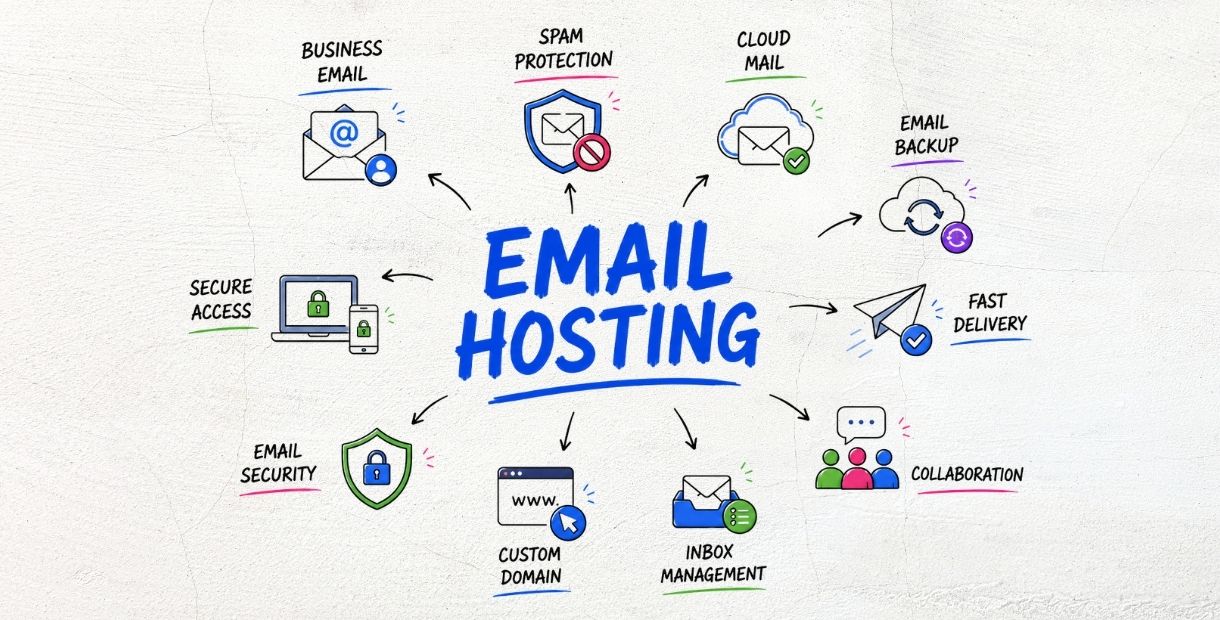
How to Choose the Right Email Hosting Service for Your Business
Email is an essential part of modern business communication. From communicating with customers to managing internal conversations, businesses rely on email every day. This makes choosing a reliable email hosting service an important decision.
The right provider can help businesses maintain secure, professional, and reliable communication while providing the flexibility needed as the organization grows.
1. Consider Email Security
Security should be one of the first factors to consider when choosing an email hosting provider.
Business emails can contain sensitive information, including customer details, invoices, contracts, and internal communications. Your email provider should therefore offer strong security features such as:
Spam and phishing protection
Malware scanning
Encryption
Multi-factor authentication (MFA)
Secure login and account management
Strong security measures can help protect business accounts from unauthorized access and reduce the risk of malicious emails reaching employees.
2. Check Reliability and Uptime
Reliability is equally important.
An email service that frequently experiences downtime can interrupt business operations and cause important messages to be delayed or missed.
When evaluating an email hosting provider, look for:
Reliable infrastructure
High availability
A strong uptime record
Backup and recovery systems
Monitoring and incident management
Reliable email infrastructure ensures that employees can access their mailboxes and communicate when they need to.
3. Evaluate Storage Capacity
Storage capacity is another important consideration.
As businesses grow, employees may receive and store thousands of emails and attachments. Choosing a hosting plan with sufficient storage can help prevent mailbox limitations in the future.
When comparing providers, consider:
Storage per mailbox
Attachment size limits
Storage expansion options
Archiving capabilities
Whether storage is shared or allocated per user
Selecting enough storage from the beginning can make it easier to manage growing email volumes.
4. Look for Scalability
A good email hosting service should be able to grow with your business.
As your organization expands, you may need to add new employees, create additional mailboxes, or manage multiple domains.
Look for a provider that makes it easy to:
Add and remove users
Create new mailboxes
Manage aliases and forwarding
Add multiple domains
Adjust storage or plans as requirements change
Scalable email hosting can prevent businesses from having to migrate to another provider as they grow.
5. Consider Customer Support
Customer support can make a significant difference, especially when dealing with email delivery problems or configuration issues.
Responsive technical support can help businesses resolve problems such as:
Email delivery failures
DNS configuration errors
Account access issues
SMTP problems
Spam and security incidents
Before choosing a provider, consider the available support channels, response times, documentation, and overall reputation for technical support.
6. Consider Email Management Features
Beyond basic mailbox hosting, additional management features can make everyday administration easier.
Depending on your business requirements, useful features may include:
Email aliases
Email forwarding
Catch-all mailboxes
Shared mailboxes
Webmail access
SMTP and IMAP support
Domain management
Administrative controls
Having these features available can give businesses greater flexibility without requiring separate services for different email management tasks.
Conclusion
The right email hosting service can provide businesses with secure, reliable, and professional communication.
When comparing providers, consider important factors such as security, reliability, storage capacity, scalability, email management features, and customer support.
Choosing an email hosting solution that meets both your current requirements and future needs can help your business maintain dependable communication as it grows.